Recovery & Repair Research
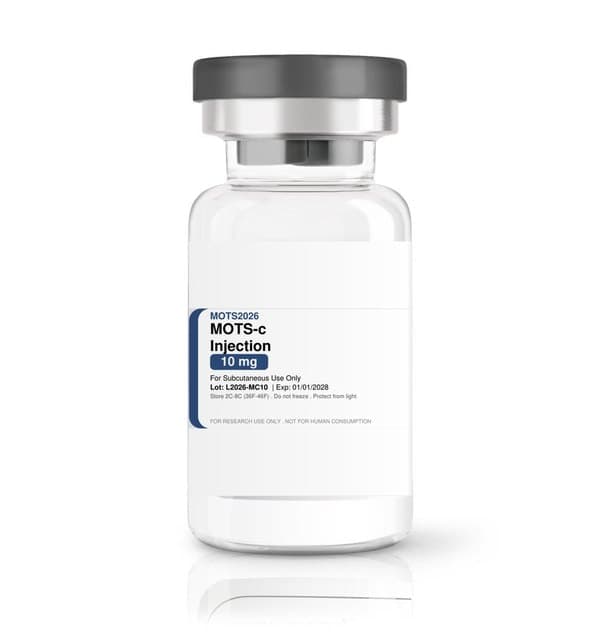
MOTS-c
Mitochondrial-derived peptide studied for AMPK activation and insulin sensitivity in metabolic and exercise research.
Select size
Price
$39.99
10mg vial · $4.00/mg
Bulk discount
- 2+ vialssave 5%
- 5+ vialssave 10%
Discount applies across the cart based on total vial count.
$39.99
MOTS-c · 10mg · $4.00/mg
Research Use Only — Buyer Responsibility
Sold strictly for in-vitro and laboratory research. Not for human or animal consumption, clinical, therapeutic, cosmetic, or veterinary use. No quality control documentation (CoA, purity report, identity confirmation, sterility data) is provided with shipments. Buyer assumes all responsibility for product use, handling, storage, downstream applications, and any consequences thereof. All sales final.
Recovery & Repair Research
About MOTS-c
A signal released by your mitochondria (the energy-producing structures in every cell) that improves how the body handles sugar and fat — essentially mimicking some of the metabolic benefits of exercise at a molecular level. Studied for insulin sensitivity, metabolic disease, and aging biology.
MOTS-c is supplied as a lyophilized powder in sealed vials, reconstituted with bacteriostatic water for laboratory use. Sold strictly for in-vitro and laboratory research purposes. For Research Use Only.
Research tool
MOTS-c reconstitution math
Calculator for research-use dilution math. Enter vial size, bacteriostatic water volume, and target study dose to see the resulting concentration and draw volume on a U-100 insulin syringe. For laboratory research only. Not dosing advice.
Inputs
Common volumes: 1 mL, 2 mL, 3 mL.
1 mg = 1000 mcg.
Results
Concentration
5.00 mg/mL
(5000 mcg/mL)
Volume per 250 mcg
0.050 mL
U-100 syringe draw
5.0 units
On a standard U-100 insulin syringe (100 units = 1 mL).
Approximate doses per vial
40.0 doses
Math reference only — for in-vitro and laboratory research use. Not dosing advice and not for human or animal administration. Kalon Research does not represent or warrant product identity, purity, or concentration. Buyer assumes all responsibility.
How Kalon stacks up
Kalon Research vs. typical vendors
What you actually get when you order from Kalon, compared with a typical mid-tier research peptide vendor. Sold for laboratory research use only — no quality control documentation provided.
- Catalog breadthNumber of distinct research peptide products carried.Typical vendorNarrow — limited to top sellersKalon ResearchBroad — common categories covered in one place
- PricingPer-vial pricing relative to mid-tier research peptide vendors.Typical vendorPremium markupKalon ResearchCompetitive — built for working research budgets
- Dispatch timeTypical vendor1–3 business daysKalon ResearchSame business day on orders before 12pm ET
- Shipping discretionOuter packaging branding and labeling.Typical vendorBranded outer packagingKalon ResearchPlain, unbranded packaging
- LyophilizationVials supplied as freeze-dried powder for shipping stability.Typical vendorStandardKalon ResearchStandard
- Direct customer supportResponse to pre-purchase or post-shipment questions.Typical vendorTicket queue, multi-day responseKalon ResearchDirect email, one-business-day response
“Typical vendor” reflects what a mid-tier supplier in the research peptide market generally offers. Standards vary — confirm directly with any supplier you're evaluating.
Related products
More in Recovery & Repair Research
Other research peptides in the same category. Mix and match to hit bulk discount tiers (2+ vials save 5%, 5+ save 10%).
BPC-157
Gastric pentadecapeptide studied for tendon, ligament, and gut mucosa repair through growth factor upregulation.
TB-500
Synthetic Thymosin Beta-4 fragment studied for actin sequestration, cell migration, and angiogenesis in repair research.
BPC-157 + TB-500
BPC-157 (10mg) + TB-500 (10mg) — paired repair peptides studied across complementary tissue healing pathways.
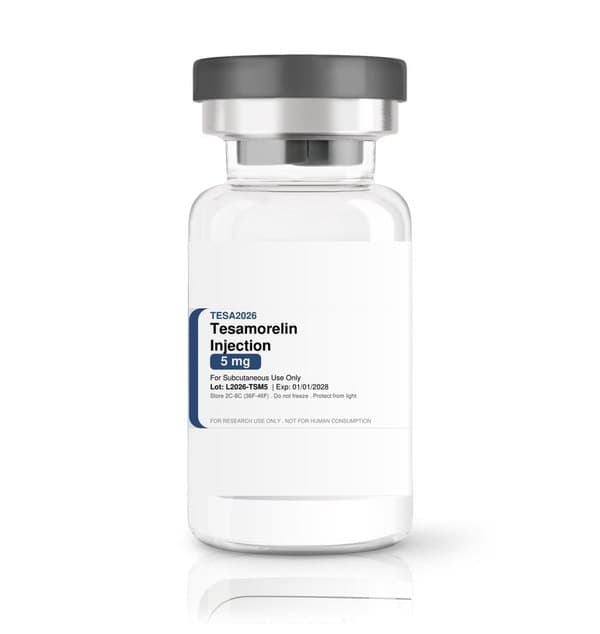
Tesamorelin
Stabilized GHRH analogue studied for visceral adiposity reduction and IGF-1 elevation in body composition research.
Research Library
Research on MOTS-c
Practical protocols and comparisons relevant to MOTS-c research applications.
MOTS-c Reference Guide: Mitochondrial Peptide for Metabolic Research
Reference overview of MOTS-c — origin, mitochondrial encoding, primary research models in metabolic and energy expenditure studies, stability, and reconstitution.
Read articleMOTS-c vs SS-31: Mitochondrial Peptide Research Comparison
Mitokine signaling versus inner-membrane structural stabilization — origin, mechanism class, primary research models, and how to choose between two compounds often grouped as mitochondrial peptides.
Read articleSS-31 Reference Guide: Mitochondria-Targeted Peptide for Cellular Research
Cardiolipin binding mechanism, ETC supercomplex stabilization, oxidative stress research models, and how SS-31 differs from mitochondrial-encoded peptides like MOTS-c.
Read article